





 Write a comment
Never skip your research.
TRIGGER WARNING. There is discussion of accusations of child molestation in the following article.
By the fall of 1995, my brother and I were deeply engrossed in a weekly trip to our local movie theater. I'd buy one week and, sometimes, he'd buy the next. It became somewhat of a running joke considering I was barely 12 at the time and he was 11 years my senior with a decent job at the time.
That fall, we saw a film called Powder. For those of you who are unfamiliar, Powder is about an albino boy who is very smart and seems to have some vague psychic powers. Many of the townsfolk ostracise him because he's different and no one gives him a chance before judging him. It's a sad movie but it has a good message.
Around 6 years later, the director of Powder wrote and directed Jeepers Creepers. It was a massive rental hit at the time, becoming something of a cult classic. It was followed by two sequels by the same writer/director. Years later, I started looking up this director's filmography. It seemed strange to me that he didn't have that many directing credits.
So, I did what most people might do: I started from the beginning.
His first feature was a film called Clownhouse. Three brothers are alone in a house around Halloween when escaped mental patients dress like clowns and begin to stalk them. I ordered it from Amazon, watching it when it arrived.
Almost immediately, I realized something was off. The mouths of the actors didn't exactly match with the words they were using, as if the audio track was one second ahead of or behind the film. It started out promisingly enough, somewhat suspenseful. Hitting all the nostalgic 80s horror vibes.
But, again, something was weird. There seemed to be odd lingering shots on one of the boys. At one point he was in a bathtub and it seemed weird. It was at this point I checked the trivia on IMDb. As soon as I began reading, I felt sick.
The director, Victor Salva, was molesting the boy in the film during filming. Salva was convicted, did jail time and was released in the mid-90s, around the time Powder was released. With the new information, Powder seemed stranger. Almost like Salva was using the main character as a thinly veiled analog of himself, as if to say, "I'm different and was ostracized for being different."
This new context shaded every other film of his I'd seen at that point. The main villain from Jeepers Creepers is obsessed with the young protagonists and has to aggressively sniff them to find out what body part the creature wants the most. Was this another analog Salva created of himself?
The implications are sometimes more than I can process. It's been a debate for a long time. Can you separate the art from the artist? To be perfectly honest, there aren't many films out there that don't have some connection to something morally dubious. One of my favorite films of all time is Chinatown, directed by Roman Polanski. In fairness, it became one of my favorite films before I knew anything about Polanski. Similarly, Scream (1996) was produced by Harvey Weinstein.
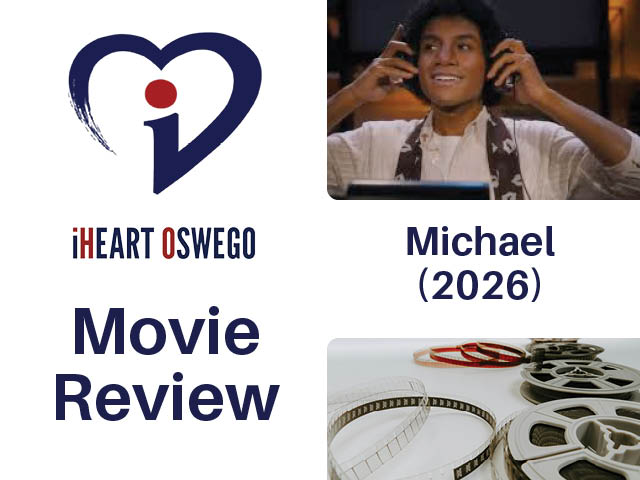
So, what do we do? What can we do? Can you enjoy the art knowing that the artist is a horrendous human being? When I first heard they were making Michael (2026), that exact question sprang to mind. It's like the elephant in the room or, to paraphrase George Carlin, the turd in the punchbowl. There was some amount of hope that they'd address Jackson as a flawed human being. Maybe it would be accurate and fair to the facts. Upon seeing the box office returns, it was clear this was not the case.
The film chronicles Jackson's life from the late 60s until 1988. We see him starting out in The Jackson 5 through him going solo against his father's wishes. The main thrust of the story is Jackson gaining enough confidence to stand up to his father. Throughout the film, Joe Jackson (Domingo) is seen as the clear villain. There aren't many shades to his character. We don't get insight into him besides the fact he seems to not be too concerned with exploiting his children. Towards the end of the film, Michael has finally come into his own and breaks free from his father's exploitation.
This is supposed to be a "huzzah" moment. The audience is supposed to get goosebumps, maybe cry a bit, because Michael finally did it. Yay. Right?
This is where it gets a little gross. For us to get the catharsis from Michael finally standing up for himself, we need to ignore the fact the film itself is exploiting Michael all over again. He's been dead almost 20 years at this point and the film just seems like a flimsy excuse to sell more records off his memory. Ignoring all the child abuse allegations, if you were to just focus on what the film is showing you, it still puts you in a bad position. Years ago, Dirt Devil did a commercial with Fred Astaire dancing with a vacuum. Dude was dead for a decade and then altered old footage of him to make it look like he was dancing with a vacuum.
This whole movie stinks of that sort of backwards thinking. Michael isn't breaking any new ground with any plot points in Michael's life. It's just a flashier, more expensive version of the same melodramatic tropes. Director Antoine Fuqua seems to be performing a task versus doing anything artistic with the camera. It's a strange movie because clearly there was a lot of money pumped into it, but it still looks cheap. Domingo's Joe Jackson makeup looks like something out of community theater. The CGI animals all look like CGI animals. It all feels extremely lazy.
This laziness permeates everything. You'd think the story of Michael Jackson would be somewhat exciting. Instead, it ends up being extremely boring. Many of these recent musical biopics seem to be more interested in putting the names of these artists back into the cultural zeitgeist. Like when someone's heart stops and the doctors come in with the paddles to shock life back into it. The heart starts beating again and the music companies can keep making money off a dead man. This goes for Michael, Bohemian Rhapsody, the Whitney Houston one that came out a few years ago, the Springsteen one from last year. The only one of these musical biopics that's worked recently is A Complete Unknown because it felt more interested in telling Dylan's story than it did just playing the hits. Even so, A Complete Unknown wasn't groundbreaking but at least it was trying.
So, are there any positives? Kinda. Jaafar Jackson does a pretty good imitation of his late uncle, but he doesn't seem to be acting. It's more he's a mimic. Any of the emotional scenes that he has to go through don't really register. There are certain people that when you watch them act, you can see the gears turning in their eyes. Much of the time Jackson is on screen, it's just a blank slate. When he's performing as his uncle, it's impressive to a degree but any of the dramatic scenes are dead on arrival.
Domingo seems to be having fun chewing the scenery but we never see another side of Joe Jackson besides "terrible father". They never really give us any insight into his character beyond the mustache twirling bad guy. Domingo is one of our finest working actors and he has charisma to spare, but the part is way underwritten. He does his best with what he's given, but it's not a lot. Domingo is trying to make this delicious four course meal with limited ingredients.
Where does that leave us? Considering the box office returns for Michael, there have already been talks about a sequel. I guess it's possible they could address the allegations against Michael in a sequel, but I get the feeling they likely wouldn't. The film and filmmakers seem less concerned with making a good film as they are making more money. Any movie that addresses the allegations would likely not make nearly as much money as this does. Michael presents Michael as a saint. A troubled, abused and exploited individual who was just trying to eke his way through life. Audiences don't want reality. They want to sit in a movie theater and listen to some of the greatest hits of an artist they love. Once any of that gets broached, it muddies the waters.
Imagine for a minute if there was ever a film made about Victor Salva, the director I mentioned previously. And when they made the movie, they talked about his struggles as a kid leading up to his first feature film produced by Francis Ford Coppola, but it ended right before we see him direct the child he would go on to molest. But up to that point, Salva is shown to be "misunderstood" not too dissimilarly to Powder. Wouldn't you think Salva's victim would take issue with that?
Shouldn't we all?
Michael doesn't want the truth of what happened. It wants you walking out of the theater, humming along to Bad or Billie Jean. What it definitely doesn't want you to do is research for yourself. Because they know that once you do, their carefully constructed house of cards comes tumbling down.
Michael (2026)
Directed by Antoine Fuqua
Cast: Jaafar Jackson, Colman Domingo, Nia Long, Laura Harrier, Larenz Tate, KeiLyn Durrel Jones, Miles Teller, Mike Myers
Runtime: 127 minutes
MPAA Rating: PG-13 (for some thematic material, language and smoking)
Rating (out of ****): 1/2
Michael (2026) is currently in theaters.