

 Write a comment
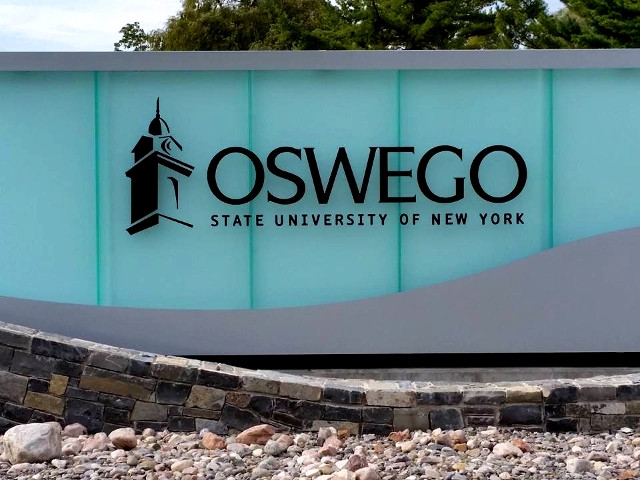
With the SUNY Oswego annual reunion for 2016 having just occurred, I thought it might be appropriate to take a portion of a chapter from my upcoming “Memoirs” book devoted to Oswego State, and highlight that for this column.
Oswego State was part of the SUNY system that underwent a huge expansion in the late 1960s due to Nelson Rockefeller’s expansionist policies. It was transformed from a small teacher preparation college to a large multidimensional liberal arts college over about a decade. The student body more than doubled from 3,200 to almost 8000 students in present-day size. Oswego State changed from a predominately Teacher prep school in 1964 to an all purpose multi-faceted Liberal Arts College, and I was one of the first 125 students in 1964 to be admitted as a Liberal Arts major.
There were the green-and-yellow beanies of freshman orientation, and the beginnings of the Great Laker hockey program, as well as concerts in Laker Hall that featured Peter, Paul and Mary, Simon and Garfunkel, and Judy Collins, as well as big college bars like Buckland’s year round and Nunzi’s in the spring, summer and fall, and Sereno's if you were lucky enough to have a date on a Friday or Saturday night. At Sereno’s, you could cozy up in a booth with your favorite date, and drink a pitcher of beer and dance to the music of Johnny Mathis on the great back room Juke Box.
We learned the names of the four steam station stacks (Huey, Louie, Dewey and Frank), and in later years, with the first big stack of 700 feet named “Big Dick”. In those days, the dorms were segregated into male and female dorms, and the women had curfews on weeknights of ten pm, and on weekends at either midnight or 1 am. You could always see several dozen couples nestled on the front steps of the Lakeside dorms, kissing and cuddling at curfew time.
Many of our classes were offered in yellow military style WWII barracks on the site where the Piez Hall Science building and new Richard Shineman building now stands. The barracks were part of old Camp Shady Shore from WWII, and were razed by the late 1960’s when the new western part of the campus was built. The Library and Hewitt Union were moved to the new western part of the campus, and the size of the school grew by leaps and bounds. Dr. James E. Perdue from Colorado was the College President, and did a fine job of helping the college transition to its new enlarged and enhanced status.
I was one of the first four students to receive a BA in political science in 1968.
Two of the four of us became lawyers, one a coordinator for the Student Nonviolent Coordinating Committee (SNCC), and an author, and the other, I am not sure what became of him. In those days, to graduate from Oswego State and go on to law school was a big deal. Few traveled that route.
Oswego State turned out to be a treasure trove of opportunity for me. I, of course, ran for student government representative, and competed, unsuccessfully, for student body president in 1967. We created the Student Action Party (SAP), while our opposition was United Students party. It was a kind of early rebels vs. the establishment contest. We were the rebels. We lost, in part because the opposition ran a full-page ad in the college newspaper on the eve of the election saying, "Don’t be a SAP, vote for US." Acronyms do matter.
Part of the problem which resulted in my loss was that, at the time of the election, I was not physically on campus; instead, I was in Washington, serving as an intern in the office of US Senator Robert F. Kennedy (D-NY). The student government voted to subsidize my expenses while serving as an intern, which I accepted, and that became a controversy. I could not have accepted the internship without the financial help provided, and I did represent my school proudly, but, as the old saying goes, be careful what you wish for.
The internship was a great learning experience for me. The Political Science Department faculty chose me to represent Oswego. At that time, Senator Kennedy offered a revolving internship of two weeks to students from New York colleges.
I stayed on Capitol Hill in a kind of run-down residential hotel known as the Commodore. In those days, it was in a very rough area of DC. Today, it is the Phoenix Park Hotel, next to the famed Irish pub The Dubliner, which is owned by Syracuse native Danny Coleman. Back in 1967, it was a little dank and dingy, but the price was right, and I could walk to work at the Senate Office Building.
In Senator Kennedy's office, I was assigned to work with the correspondence section, which meant that we composed responses to constituent letters that required more than a standard reply.
At the time, a pleasant, if plain-Jane-type woman named Mary Jo Kopechne, was one of my supervisors. I liked her very much. Her name may be familiar to you, since she met a tragic early demise on Chappaquiddick Island in what would be a horrible drowning.
Many of the letters I worked on related to people writing in opposition to the war in Vietnam, which was raging full force at the time, and the Senator had not yet taken the anti-war position that was to become a focal point of his 1968 campaign for the presidency, so it was a delicate subject.
I remember one letter I wrote to a veterans' group. I wish I had kept a copy, since my supervisors told me that it was brilliant. Just like the senator, I myself had not yet fully formulated my feelings about the wisdom or lack thereof of our involvement in Vietnam. The gulf of opinion in those days was very generationally related. Most young people opposed the war while the WWII and older generation were generally more supportive of the effort, viewing opposition as being “ unpatriotic.” As the war dragged on, my opposition hardened. Senator Kennedy’s announcement of his opposition to the war took place on February 8th of 1968 in a widely heralded speech dubbed "The Unwinnable War" at Kansas State University in Manahttan, Kansas, in which he broke with President Johnson, with whom he had never been very friendly.
I actually flirted with supporting Senator Eugene McCarthy, despite my allegiance to Senator Kennedy. In fact, I wrote a column in The Oswegonian in May of 1968 in which I sharply questioned my mentor’s bona fides on the war. In hindsight, I must admit that things changed dramatically after Kennedy’s anti-war speech, and whether Senator Kennedy was a Johnny-come-lately or not, it hastened LBJ’s decision to withdraw from the race, announced in a famous televised address to the nation on March 1, 1968.
Unfortunately, Senator Kennedy was assassinated a little less than three months later by Sirhan Sirhan at the Ambassador hotel in Los Angeles on June 5, 1968, right after winning the California presidential primary. There is more to tell about those internship days, so...to be continued.
