

 Write a comment
Norma Bartle was a trailblazer. She was a brilliant woman who lived life fully and embraced opportunities when they came to her. She rose to each occasion with determination and good humor, and always had a way of smiling, even in her darkest hours. It was a warm, ingratiating smile.
The kind that puts you at ease, and makes you think that, if she is OK with things as they are, then things must new pretty well OK, generally. You could always feel her warmth and generosity of spirit, and on top of all of that, she was a fun person to be with.
Norma was born in New Jersey and lived in New York City and Albany before relocating to Fulton at an early age. She was active in school, and was president of her Fulton high school graduating class.
She married young and became a mother at the tender age of 19. College was then out of the question. Her son Robert grew up to be a strapping and talented lad, but her marriage did not survive.
Things changed in her life when she met a young political science professor named Fred Bartle in 1961. They fell in love while he was a graduate student at Syracuse University, and she was a secretary in the department. They moved to Minetto and bought an old farm house on the Granby-Minetto Road, and set about restoring it to its former semi-glory. Fred taught political science to large lecture halls of eager young students in newly minted mega classrooms at SUNY Oswego, which was transforming from a teacher's college to a multi-dimensional liberal arts education center. Norma involved herself in faculty wives groups, and was a founder of the Oswego Valley League of Women voters, where she met such notables to be as Muriel Allerton, later mayor of Fulton, and Patti McGill Peterson, later president of Wells College and St. Lawrence University.
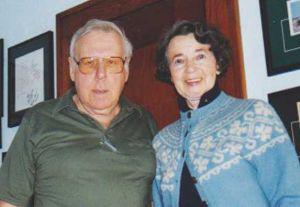 Norma would often host small get togethers with Fred's students, who the Bartles would welcome to their farm home for cocktails and hors d'oeuvre. (The drinking age back then was 18, so it was OK for freshmen to have a glass of beer or wine). She would invite other townspeople and faculty, and would make sure the students felt welcomed, and were given a chance to mix and mingle. Norma became the kind of Pearl Mesta of faculty-student gatherings at Oswego State, and the students loved her.
That is how I first met Norma, at a fall end of semester party at their first Minetto house. They went on to build two other new houses on the same parcel of land. They were always building, adding, and changing.
Fred was the kind of professor who loved to foster debate in his classroom. He was tolerant of all views, but you always knew where Fred stood, and his insightful manner and didactic lecturing style, coupled with his encyclopedic knowledge of all things political was an amazement to me. I wasn't his best student. In fact, the first grade I got in his class was a C. I went on to get straight A's in political science thereafter, but I have never let Fred forget that his humbling assessment of me in my freshman year was a wake up call that I heard loudly and clearly. It got my attention. He made you think, and think critically, and he was always willing to play devil's advocate with you, especially if he thought you were getting too clever by half. Fred was an outstanding teacher, and a great a professor, but he was more than that. He and Norma befriended many students and made them feel as though they mattered as human beings.
Ken Auletta, author, former Newsday columnist and New Yorker columnist was one of Fred's more accomplished political trainees. Dick Farfaglia was another. Dick went on to serve four different speakers of the state Assembly as political, director, and brought in a whole generation of Oswego interns into the real world of Albany politics. Dick got that job after managing my close but unsuccessful campaign for the state Assembly in 1974. Fred was my campaign speech-writer, and Norma was my best volunteer.
Several years earlier, in 1972, I cajoled Norma into running with me as a delegate pledged to George McGovern in the Democratic Presidential primary. We attended the Democratic National Convention in Miami, and had an incredible time there, even though McGovern's "Come home America" speech at 4 a.m. fell on deaf ears and was seen by few Americans. It was a thrilling opportunity to be involved in politics at the national level, and it whetted her appetite for more, so she ran and won a seat from Minetto on the Oswego County Legislature, and became the first woman ever to do so. She then decided to mount a campaign for Congress in 1976, and again in 1978, nearly unseating an entrenched Republican congressman, Bob McEwen from Ogdensburg.
Norma's 1976 campaign was the most energetic and exciting Congressional race the North Country had ever seen. She lost, but she won many admirers. She later served as regional representative for Gov. Hugh Carey, and later Mario Cuomo, and traveled extensively throughout the region, winning friends wherever she went. Norma's tall white boots and her long pony tail hair became familiar sights to thousands of central and northern New Yorkers.
One little known fact about Norma is that in her first campaign, singer Harry Chapin performed at a benefit concert for her in Plattsburgh, a few years before his untimely death in a car crash on Long Island in 1981. Rumor has it that he wrote the song "A better place to be" (which mentions Watertown) while on the campaign trial for Norma Bartle in the North Country.
Fred and Norma (who Fred affectionately called Normeo) built a much bigger farmstyle house, and then sold it and built a more modern one on part of the same Minetto property. We spent many a summer afternoon there swimming in her new pool, and enjoying the company of her two teenaged daughters, Susan and Gamin.
After retiring to Charlottesville, Va., the Bartles built three more new houses, Norma became a personal assistant to a multi-billionaire philanthropist, and Fred became a docent at Jefferson's home, Monticello. In their later years they moved to Albany to be closer to their daughter, Susan, and two of their grandchildren, Tim and Abbey Perry, of Albany. Another granddaughter, Lisa Longley, lives in Charleston, S.C.
Fred still lives near Susan in quiet retirement. Norma passed away this past December at the age of 85, after several years of declining health. A memorial service for Norma is being planned for Oswego this spring,
My memories of those Minetto years are crisp and filled with many pleasantries. Norma Bartle was a remarkable woman, a quiet trailblazer, a wonderful mother, wife and grandmother, and in these days when they say if you want a friend in politics get a dog, she was even rarer. She was a true friend. They don't make them any better than Norma Adams Bartle.
