












 Write a comment



Every winter, when most sensible humans are huddled indoors under a blanket, a very different crowd shows up in Oswego Harbor: thousands of Arctic sea ducks.
While most of us, myself included, are complaining about frozen windshields and the emotional trauma of shoveling, these birds are like, "Ah yes, the lovely confines of Lake Ontario in January."
Sea ducks, which include various species of eider, scoter, scaup, and others, treat Oswego like a seasonal resort. This is their winter getaway with open water, plentiful food, and a mild (for them) climate. What makes Oswego such a fantastic spot for winter duck-watching is the harbor itself. The break wall acts like a corral, herding ducks closer to shore. Instead of being scattered across the vastness of Lake Ontario, many end up within about 200 yards of land or closer. Near enough you can see details from Breitbeck Park with a basic pair of binoculars.
And here's the best part: you don't need fancy gear. A decent pair of binoculars or a spotting scope, both of which can be found for under $100, will do the trick. That's less than a monthly cable bill, and to bird nerds like me, far more rewarding.
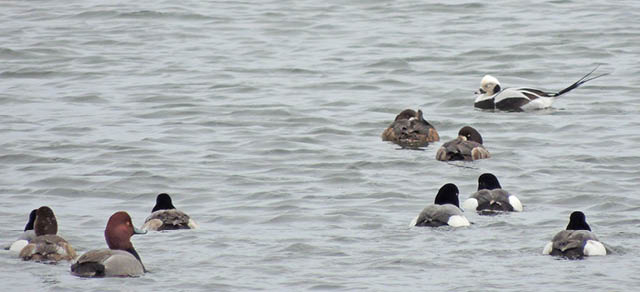
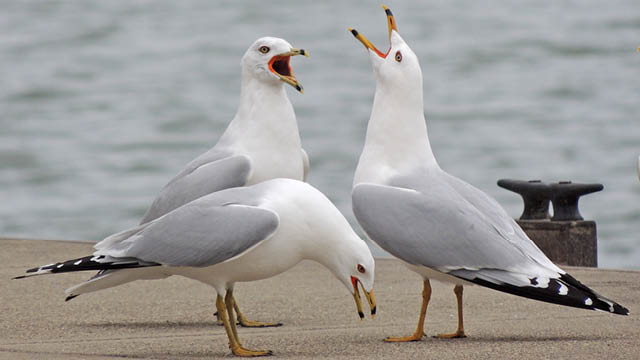
Last week I headed down to the harbor to see who was in town. The headliner? Long-tailed ducks, and not just a few, there were thousands. These birds are distinct with their black and white plumage, long elegant tail feathers on males, and the ability to dive to depths of 200 feet in search of food. They were joined by large numbers of greater and lesser scaup, red-breasted mergansers with their punk-rock hairdos, a few American coots, some cold looking double-crested cormorants, Redheads- the gingers of the bird world, and even a bald eagle overhead. The gulls, of course, were also present. Herring gulls and the largest member of the gull family, greater black-backed gulls, were observed loafing about.
Not all of these birds are thriving, though. Some species, like the surf scoter, have been declining for decades. Some studies say that surf scoter numbers have dropped significantly since the mid-20th century, by about 40–50%, over the last 50 or so years. These ducks with their oddly colorful bills can be hard to tell apart from similar species, especially the females, which is one of the reasons I personally don't support duck hunting. If it's tricky for trained birders with binoculars to ID ducks sitting still, I'm not convinced it's being done accurately by others. Mistakes matter especially when populations are already struggling.
So if you're feeling cabin fever this winter, consider heading down to Oswego Harbor. Bring binoculars, dress warmly, and remember: somewhere out there a bufflehead is waiting for you.