







 Write a comment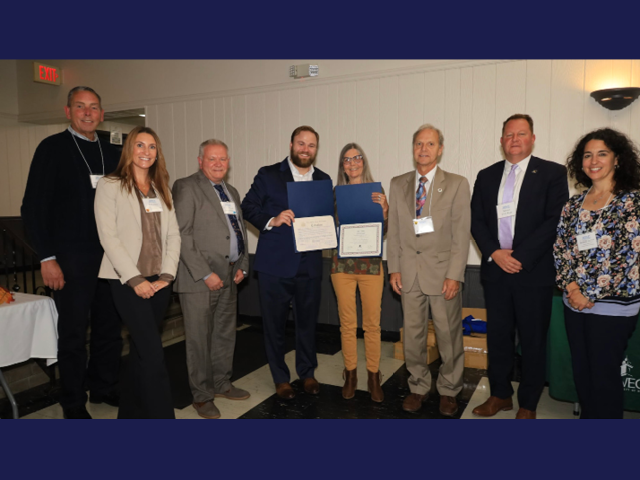

On Thursday, the Safe Haven Museum welcomed bikers from multiple clubs in the Jewish Motorcycle Alliance as part of the alliance’s North American Holocaust Museum Tour.
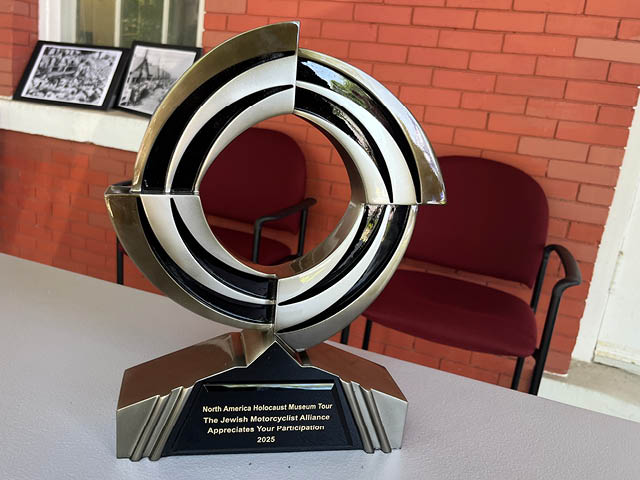
The bikers are participating in an international club-to-club relay of the Circle of Chai. This symbolic work of art represents both the circle of life and the number of times it was broken as a result of the Holocaust. (A note on the artwork’s name: Chai is Hebrew for the word “life.”) Bikers from Toronto’s YOW club were handing off to those in the CNY chapter of the JMA, Thou Shalt Ride of Syracuse. The Safe Haven Museum was chosen as the 18th stop, which in Hebrew is also represented by the word “chai,” making it doubly significant.
The date was chosen for its significance as well: July 24th was the 80th anniversary of the liberation of the camps.
Why was such importance placed on Oswego’s Safe Haven Museum?
“This is hallowed ground,” Mayor Rob Corradino said in his opening remarks at the museum. The museum marks the only place in the US where Jewish refugees were interned—where the Holocaust came to America.
“But it wasn’t a death or labor camp,” said incoming president of the Safe Haven Museum, Paul Lear. Instead, the camp was a safe place for 982 Jewish refugees to stay until the end of World War II. “This opened the door to other refugees too… making it the birthplace of modern US refugee policy.” Because of the Safe Haven, refugees from Vietnam, Afghanistan, the Soviet Union, and beyond have been able to find safety within our nation’s borders.
Oswegonians became the refugees’ first on-the-ground advocates, getting to know the refugees through what journalist and writer Ruth Gruber called “the fence club.” After dinner each night, refugees and Oswegonians would flock to their sides of the fence separating Oswego from its newest neighbors, offering a welcoming community and, oftentimes, necessities like canned goods. Strangers became friends who stuck up for each other: Oswego residents fought to allow the refugees the option to settle in the US permanently after World War II ended.
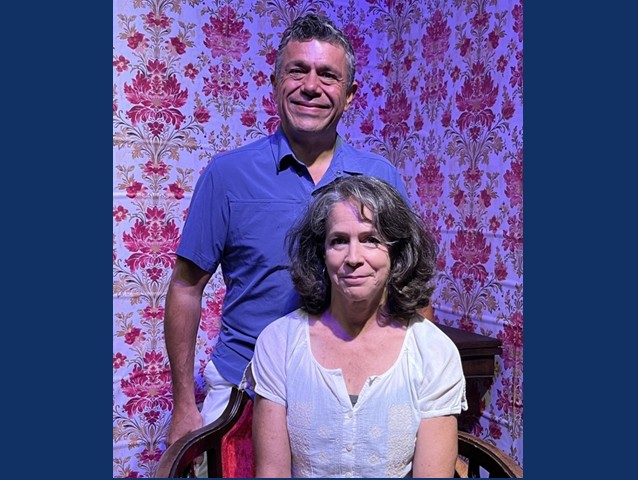
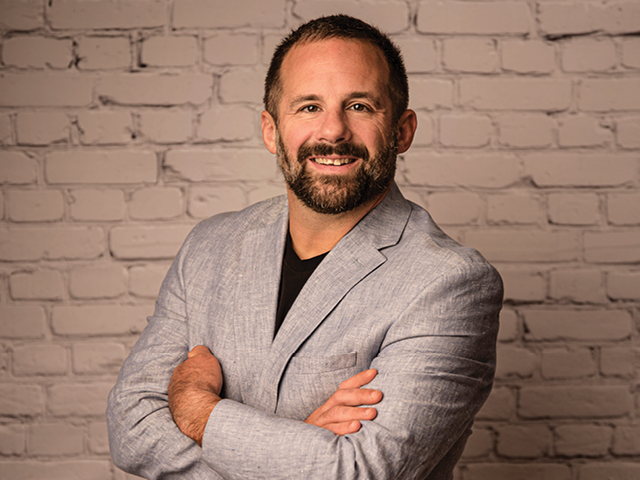
In addition to hearing from Corradino and Safe Haven Museum representatives, attendees of the morning’s ceremony heard from various members of the Jewish Motorcycle Alliance and their family members. Ruth Freedom Stein spoke about her parents, who were separated during the war before eventual reunification and immigration to the US. Her father spent time in Buchenwald before escaping to the UK. After her parents passed, Stein had his letters to her mother translated from the German and turned into a book; she presented a proof copy to the museum in honor of its support of Holocaust victims. Her spouse, Joel Stein, is the president of Thou Shalt Ride of Syracuse. He also spoke during the ceremony and received the Circle of Chai from his counterpart Jay Mandelker of Toronto’s YOW chapter.
JMA members also presented a copy of the Circle of Chai to the Safe Haven Museum as part of the ceremony.
“More than ever, it’s important that we remember the names of the victims and continue to tell their stories,” Joel Stein noted after presenting the piece of art to museum secretary, Rebecca Erbelding.
We at iHeart Oswego couldn’t agree more. We encourage members of the community to stop into the museum to see this wonderful artwork and honor those impacted by the Holocaust. You can find out more about the Safe Haven Museum on their website.