














 Write a comment


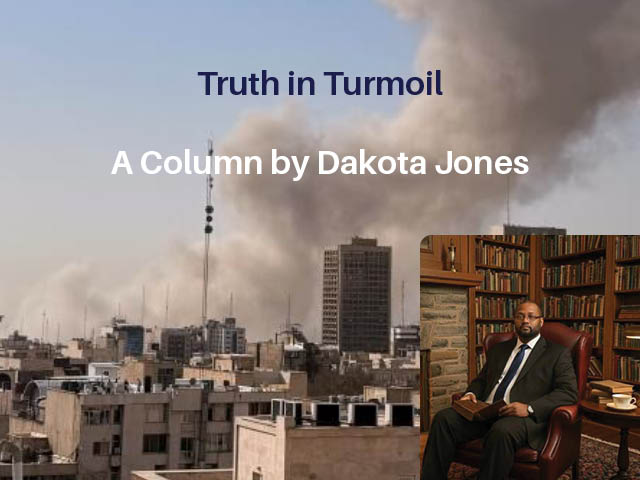
But are end credits rolling? Or are we just setting up the next season?
A SIMPLE REMINDER
It’s hit me lately, watching the wall‑to‑wall coverage, the breaking news banners, the shouting matches on TV, the endless TikToks and hot takes: for all the noise, almost nobody is just looking into the camera and saying, plainly, “We’re going to be OK.”
So before we get into the headlines — the deportations, the economy sputtering and stalling, the foreign wars simmering on our screens — I want to say that out loud.
WE ARE GOING TO BE OK.
The sun is still going to rise tomorrow and it’s still going to set, right on time. We’re still going to stand in parking lots and watch a ridiculous pink sky. Kids are still going to roll their eyes at their parents. Someone is still going to fall in love in the produce aisle. Life, is stubborn and beautiful, and still happening in the middle of all this.
I know these are hard days. It feels like everywhere you look, there’s another story about people being torn from their homes, another layoff, another rumor of another war. It’s easy to start believing the world is nothing but hate and chaos and cruelty. It can swallow you if you let it.
But here’s the thing: this country has been through storms before — worse ones than we like to remember. We’ve had waves of panic and crackdowns, booms and busts, wars that seemed like they might never end, leaders who scared us, leaders who failed us. We’ve marched, we’ve argued, we’ve broken apart, and we’ve somehow come back together again. Over and over, we have bent but we have not broken. We endure. That’s not a slogan; it’s our track record.
In moments of high stress like this, you have to ground yourself. Look up from the feed. Notice the ordinary kindness right next to you: the neighbor who checks on the elderly couple down the hall, the stranger who pays for someone else’s groceries, the coworker slipping cash into a GoFundMe instead of posting another rant. There is so much quiet goodness around us if we’re willing to look at it with the same intensity we give to outrage.
So to everyone reading this: remember, this is a moment in time, not the end of time. You still know the difference between right and wrong, up and down, fear and decency. Take a little extra time in your day to enjoy something simple and real. Take a little extra time to lift up someone who’s clearly struggling. That’s how we get through rough chapters — not by pretending they’re fine, but by refusing to let them define us.
In a minute, we’re going to talk about Iran, about the current state of affairs abroad and the choices being made in our name. We’re going to talk honestly about the ways this all feels like too much.
But as you read, hold onto this: this is just another chapter. It is not forever. It is not all that we are.
We’ve made it through a lot. We will make it through this. It is never a problem.
MIDNIGHT HAMMER TO EPIC FURY
Welcome to season fifty-something of the U.S. vs. Iran: the international feud that just refuses to die. Forget Netflix dramas—this is the real binge-worthy saga, and it’s officially gone hot. That’s right: as of February 28, 2026, the world woke up to headlines screaming about war between the United States and Iran. Spoiler: nobody’s winning.
On February 28th in the wee hours of the morning The United States and Israel launched a coordinated military offensive against Iran, codenamed Operation Epic Fury by the U.S. Department of Defense and Operation Roaring Lion (Mivtsa She'agat Ha'arí) by Israel. Airstrikes rocked Tehran, with explosions reported near Supreme Leader Khamenei’s offices. In a historic escalation, Ayatollah Khamenei was killed in the strikes—marking the first time the U.S. has successfully eliminated Iran’s top leader through direct military action. This is not a limited strike. This is a full-scale assault with an explicit objective: regime change.
Before diving deeper into the latest developments, it’s crucial to understand a fundamental constitutional principle: typically, “police actions” and limited military operations do not include regime change as an objective. Historically, when Congress has formally authorized military force—whether in World War II, Korea, or Iraq—those authorizations were debated openly in both the Oval Office and the Congressional chamber, with explicit discussion of objectives and stakes. Most congressionally-authorized military actions have been defensive in nature or aimed at specific, limited objectives, not the overthrow of foreign governments.
Regime change operations are categorically different. Throughout history, the rare instances when the United States has pursued regime change—from the 1953 Iranian coup to the 2003 Iraq invasion—these decisions have typically involved extensive briefings, public debate, and explicit congressional authorization or approval. Presidents have traditionally felt compelled to explain to both Congress and the American people what was at stake and why such a dramatic action was necessary. The current Iran operation, however, appears to have bypassed these safeguards. There’s growing concern and debate over the lack of clear congressional authorization and notification before launching such a significant operation with an explicit regime change objective. This blurring of constitutional lines not only raises questions about democratic oversight but also sets a precedent for unchecked executive action in matters of war. The War Powers Resolution of 1973 requires presidential notification within 48 hours and congressional authorization for operations lasting beyond 60 days, yet the 2026 Iran intervention appears to have bypassed these safeguards, leaving lawmakers scrambling to understand the scope and duration of what amounts to the largest unauthorized military operation—and the first explicit regime change operation without prior congressional approval—since the 2003 Iraq invasion.
FLASHBACK: HOW DID WE GET HERE?
Let’s rewind to 1979. While Americans were busy with disco’s last gasps and “Mork & Mindy,” Iran was busy flipping the geopolitical table. Ayatollah Khomeini ousted the U.S.-backed Shah and grabbed 52 Americans at the embassy—just to make it clear, Iran was done being America’s puppet. The hostage crisis? Yeah, it didn’t just humiliate the U.S.—it nuked Jimmy Carter’s presidency and handed Reagan the keys to the White House. America was too distracted by TV to notice the Middle East was rewriting the rules.
THE ‘80s, ‘90s, AND THE NEVER-ENDING GAME
Fast forward: Iran outlasts an eight-year war with Iraq (thanks, U.S., for arming Saddam), shrugs off the “state sponsor of terrorism” label, and endures embargo after embargo. The U.S. tries to squeeze Iran out—economically, diplomatically, militarily. Iran? Unbothered. Strengthened by isolation, they play chess while America’s still learning checkers.
AXIS OF EVIL AND NUCLEAR NIGHTMARES
2002: President Bush adds Iran to the “Axis of Evil.” Suddenly, everyone’s obsessed with Iran’s nuclear program, but the U.S. is too busy invading Iraq to follow through. Iran picks up even more influence in the region. Genius.
2015: The Iran nuclear deal (JCPOA) gets signed. For a hot second, there’s peace. Then Trump tears it up, sanctions fly, and Iran’s back to enriching uranium like it’s a competitive sport.
2020: Was like watching a slow-motion car crash. The U.S. kills Iran’s top general, Qasem Soleimani. Iran fires missiles at U.S. bases. The world holds its breath. The following years? Cyberattacks, shipping disruptions, proxy wars, and endless threats. Diplomacy? Please. The only thing getting negotiated is who gets to issue the next ultimatum.
By 2025–2026, the world’s most dysfunctional group chat is still going strong: nukes, militias, cyberattacks, and zero resolution. Add in a Pentagon security leak (because who doesn’t love a little Signal app drama?) and it’s chaos with a smartphone.
IRAN’S REGIONAL DRAMA CLUB
If you thought Iran’s only hobby was trolling the U.S., think again. They’re running proxy wars across Iraq, Syria, Yemen, and Lebanon. With Israel, it’s a never-ending cold war. Saudi Arabia? Just another feud. Russia and China? Iran’s got backup dancers for their “Don’t Sanction Me” world tour. Europe’s in a nuclear panic, and oil prices are one tweet away from spiking.
TODAY: THE FUSE IS LIT
Now, the standoff is over uranium enrichment, militias, and cyberattacks. Iran’s got friends in high places (hi, Moscow and Beijing), and the Middle East is a powder keg. If Iran gets a nuke, the region explodes—figuratively, and maybe literally. Israel and Saudi Arabia are already panic-buying bunkers.
Meanwhile, Iranian hackers are targeting U.S. water utilities, hospitals, and the power grid. The Strait of Hormuz—25% of the world’s oil trade—could be shut down at any moment. Your gas bill? About to get a lot more interesting.
BREAKING SO… WHAT NOW?: BOMBS, BLACKOUTS, AND THE BEGINNING OF THE END?
So, where are we now? As of Saturday morning, the U.S. and Israel have officially stopped flirting with “red lines” and started dropping real ones—right on Iran’s doorstep. Airstrikes rocked Tehran, with explosions leveling the home of Supreme Leader Khamenei’s killing him, the regime is rattled, and nobody really knows what comes next. President Trump, never one to miss a dramatic moment, went on live TV to declare “major combat operations” and told Iranians, “The hour of your freedom is at hand.” Translation: He wants regime change, and he wants it yesterday.
Iran’s response? Missiles and drones flying right back—sirens wailing across Israel, U.S. bases ducking for cover, and the whole region suddenly realizing that “proxy war” was the warm-up act. Tehran’s streets are now a mess of protests, blackouts, and social media is flooded with videos of crowds chanting for the end of the regime, while state TV cuts to patriotic music and “all is well” announcements. Spoiler: all is definitely not well.
Inside Iran, the succession process is about as clear as a government press release printed in fog. Power brokers are jockeying behind the scenes, the Revolutionary Guard is trying very hard to look in control, and ordinary Iranians are mostly trying to keep the lights on and the internet working long enough to figure out what is actually happening.
But let’s be clear—Iran is culpable here and just ignoring Iran hasn’t exactly delivered world peace, so maybe the president’s approach of actually doing something (anything!) is worth a rational nod. No need for a standing ovation, no need to get misty-eyed and sing the national anthem—just a little credit. We do however have very serious questions about our next move and the legality of such a broad unilateral move to out a regime—something I expect Congress to bring up in the upcoming meeting with the President.
Is Iran “on the brink” of change? Maybe. Is the region suddenly safer? Absolutely not. Is this the moment everything is decided forever? Also no. This is what history actually looks like up close: messy, contested, improvised, and narrated in real time by people who sound way more certain than they should.
So, here’s hoping President Trump can actually keep his cool and steer the ship—though, let’s be honest, expecting him not to turn every press conference into an ego-fueled soapbox is like expecting reality TV to suddenly become Shakespeare.
So here we are: bombs falling, power flickering, and the world watching to see what Iran’s government will actually become after all of this —while hoping that we are not in for another season of “America’s Next Top War.” Stay tuned, stay informed, stay realistic, and keep your news alerts on. Maybe, before the address comes on and the pundits start grading it like an awards show, remember: no one actually knows how this ends yet—no matter how confident their chyron looks.